ServicesWhole-Home Filtration
Whole-Home Filtration in St. Francis
If your shower smells like a pool or your tap water tastes off, a whole-home filter fixes it at the source. We install one system on your main line so every faucet, shower and appliance gets cleaner water, and we explain your options and costs before any work starts.
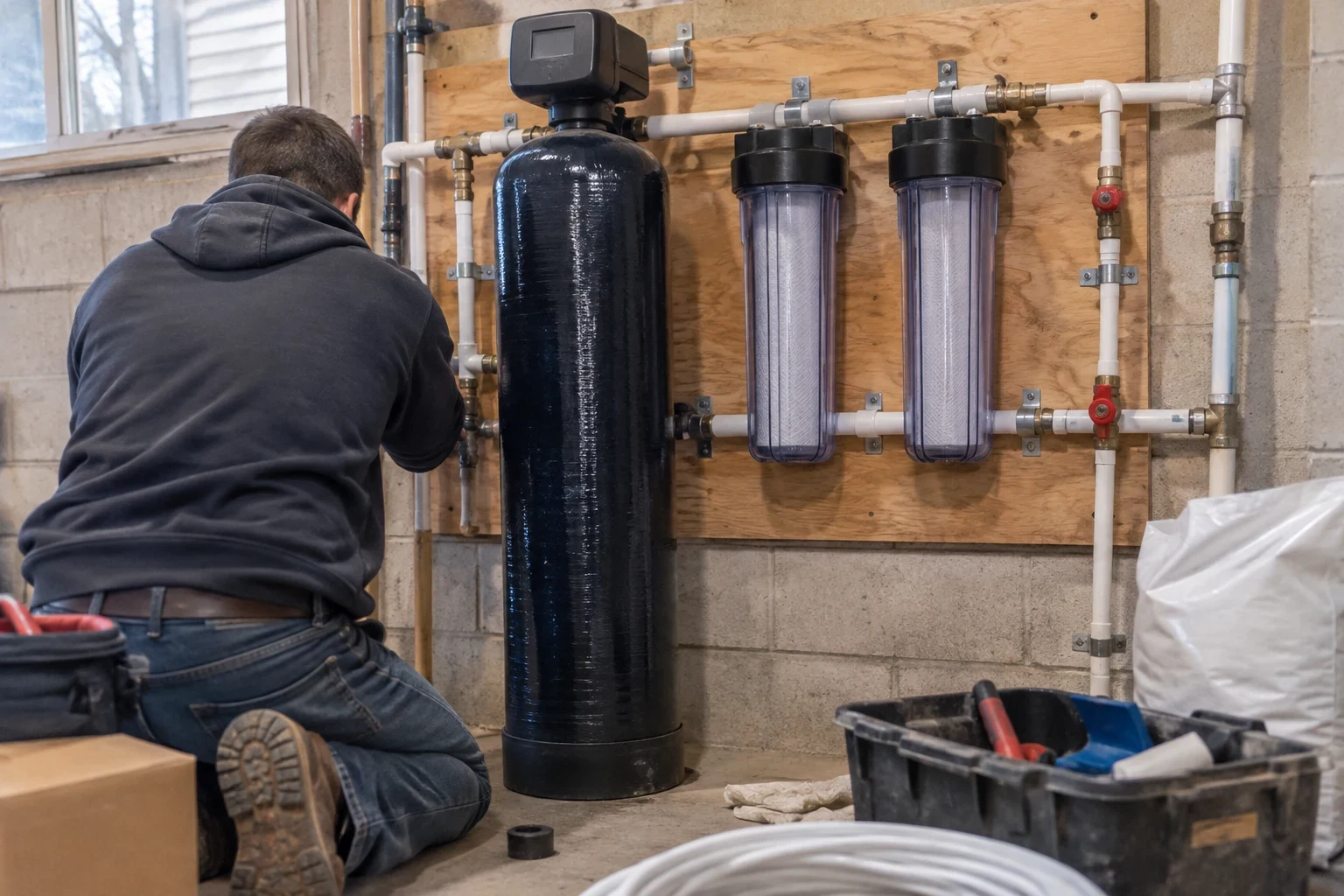
One filter for the whole house
A whole-home filter sits at the spot where water first enters your home, most often in the basement close to the meter. You may also hear it called point-of-entry treatment. Incoming water passes through a sediment stage, then through a bed of carbon, before it ever reaches your water heater or a faucet. That carbon bed is what pulls out the disinfectant used in city water, and with it the flavor and odor you have been noticing.
It is the right choice when the trouble is everywhere: the kitchen sink, the shower, the laundry room. If you only care about the water you drink and cook with, our Reverse Osmosis page explains a smaller under-sink system. If spots and scale from hard water are the real issue, keep in mind that a filter does not soften. Our Water Softeners service handles that, and many homes use both side by side.
What your installation includes
- A system sized to your home
- We match the tank or housing to your number of bathrooms and how much water gets used at the same moment. Go too small and pressure sags whenever a shower and the washer run together.
- Sediment prefilter
- A first stage traps grit, rust flakes and fine particles, so the carbon behind it lasts longer and stays focused on taste and odor.
- Bypass valve
- We add a bypass so water keeps flowing to the house while the filter is serviced or a cartridge is swapped.
- Clean tie-in to your main line
- The system goes into your existing pipe, whether copper, PEX or older galvanized, with proper fittings and supports. Every joint gets checked under pressure before we pack up.
- Startup flush and a walkthrough
- New carbon has to be flushed before use, so we run water until it comes out clear. Then we show you the shutoffs, the bypass and when your next filter change is due.
Signs a whole-home filter would help
The shower smells like chlorine
Hot water releases disinfectant smell into the air. If you notice it most in the bathroom, a drinking-water filter alone will not reach it.
You buy bottled water for taste
When everyone avoids the tap because of flavor, filtering at the main line changes every glass, ice cube and pot of coffee.
Grit in aerators or toilet tanks
Fine sediment that clogs faucet screens and settles in tanks can be stopped before it reaches your fixtures and appliances.
Too many small filters to track
Keeping up with a pitcher, a fridge cartridge and a filtered shower head adds up. A single system at the main line leaves you with one filter schedule instead of three.
What shapes your quote
No two basements are set up quite the same, so we price the job after we know how your water line runs and what system suits it. Your quote stays good for 30 days, which gives you room to compare and think it over. Once you sign, you still have three business days to cancel. Financing is available through U.S. Bank Avvance, on approved credit.
Household size and flow
A home with more bathrooms and more people calls for a bigger tank or a higher-flow housing, so pressure holds up when several taps run at once.
Cartridge or carbon tank
Cartridge systems and backwashing carbon tanks cost different amounts up front. They also differ in what you will spend on replacement media down the road, and we lay out both.
Pipe type and working room
Cramped spaces, finished ceilings or worn galvanized pipe that needs replacing near the connection point take more labor to work around.
Distance to a drain or outlet
A backwashing tank needs a drain, and some need power nearby. If either is a long way off, the added plumbing is listed separately so you can see it.
Adding a softener at the same time
Installing filtration and a softener in one visit lets the two jobs share labor and fittings, which usually costs less than doing them on separate days.
What to expect from start to finish
- 1
A quick conversation by phone
Let us know what you are tasting or smelling and which rooms it shows up in. We will tell you honestly whether whole-home filtration is a good fit, give you a free quote and walk you through financing if it helps.
- 2
A look at your main line
We note where the water comes into your home, what the pipe is made of, how much room there is and how close a drain sits. Those details guide which system makes sense and how involved the install will be.
- 3
The install itself
After shutting the main valve, we cut the filter into the incoming pipe, add the bypass and mount the equipment securely. Water is off for just part of the visit, and you will know in advance roughly when it comes back.
- 4
Final checks and cleanup
We flush the fresh media until it runs clear, test each connection under pressure and leave the area tidy. You pay in full once the install is finished, not ahead of time.
Whole-home filtration questions
Will a whole-home filter lower my water pressure?
When the system matches your home's demand, you should not feel a difference at the shower or faucet. Weak pressure after a filter goes in almost always means the unit was undersized or a cartridge was overdue for a change. We pick the size based on your bathrooms and daily use so things feel the way they did before.
How often does the filter need changing?
It varies with the type of system and how much water your household goes through. Cartridge units get fresh cartridges on a set schedule, and larger carbon tanks can go much longer between media changes. We tell you the expected interval for your system before you decide.
Does whole-home filtration soften water?
No. Carbon takes care of taste and smell, but the hardness minerals that leave spots and scale pass right through it. If both issues are on your list, a softener can be installed beside the filter.
Is this the same as a reverse osmosis system?
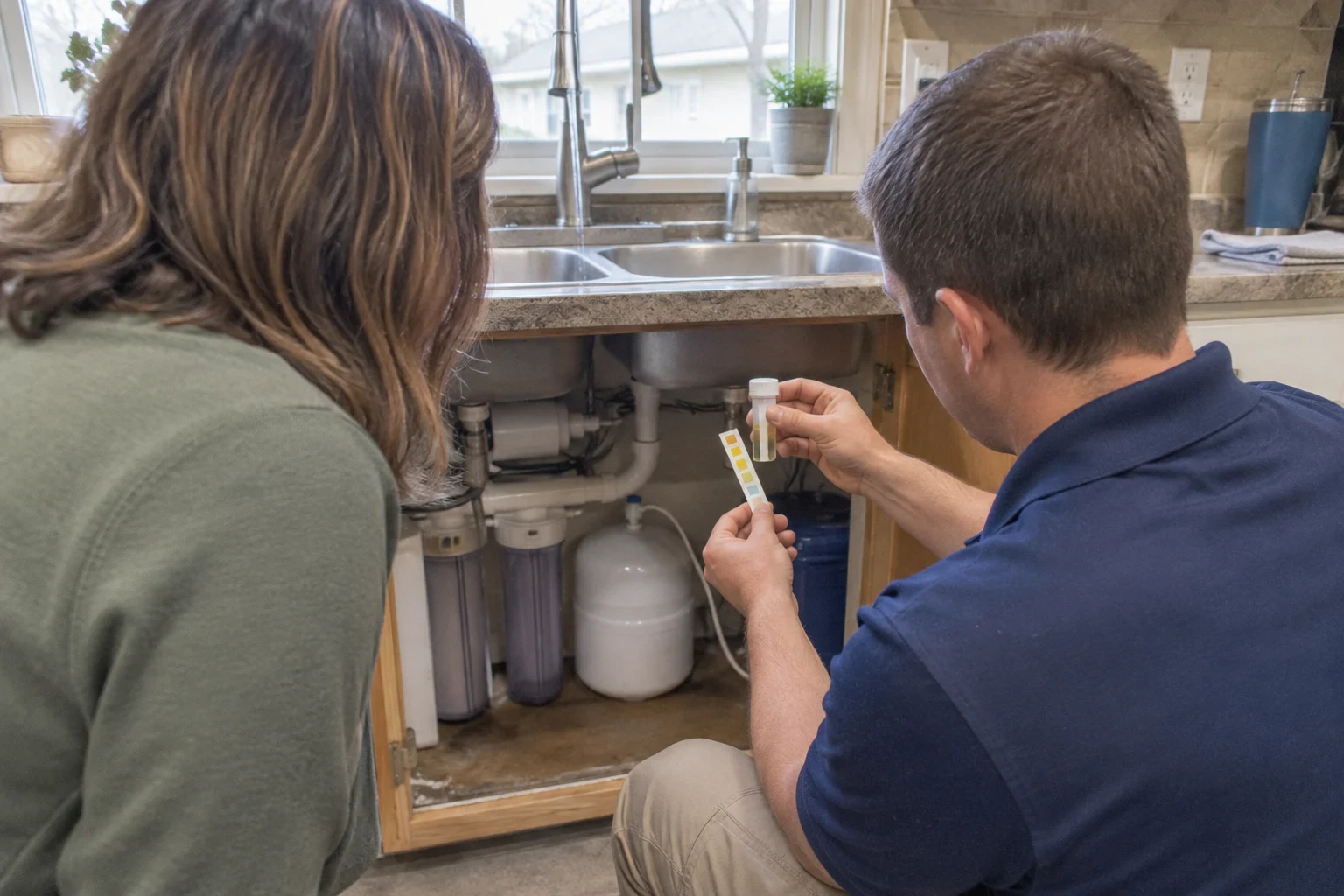
No, they solve different problems. A whole-home filter handles all the water entering your home, targeting taste, odor and sediment. Reverse osmosis is a small unit under the kitchen sink that treats drinking and cooking water to a finer level.
Will homeowners insurance pay for a new filter?
In most cases it will not, since insurers treat a filtration upgrade as an improvement and not as damage. If an older system or fitting leaked and caused water damage, we can take photos and put in writing what we saw, so you have it on hand for your claim. Whether it is covered is up to your insurer and the adjuster.
Do you offer financing?
Yes, financing is available through U.S. Bank Avvance, on approved credit. Just mention it when you call, and we will go over the terms and the approval steps before you agree to anything.
Ready for better water at every tap
Give us a ring to talk through what you are noticing. We will give you a free quote and explain your financing options, with no pressure to decide on the spot.