ServicesWater Softeners
Water Softeners in St. Francis
Hard water leaves crust on faucets, film on dishes and scale inside your water heater. We install a softener sized to how your household uses water, plumb it cleanly with a bypass, and show you how to keep it running.
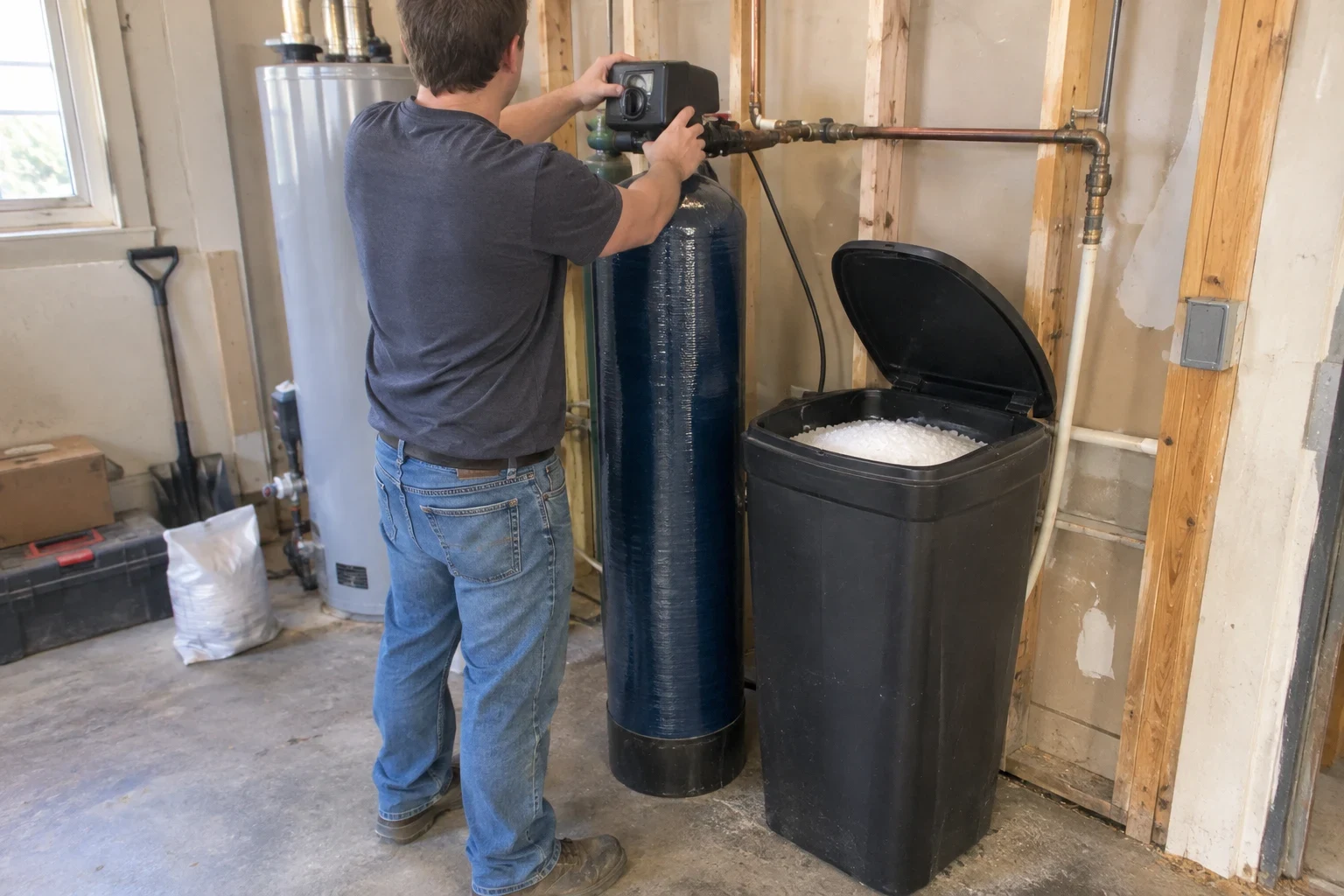
What a softener does for your home
Hard water carries calcium and magnesium, and a softener trades those minerals out for a little sodium or potassium as water passes through the resin. Those two minerals are behind the white crust on shower heads and the scale that builds up on water heater elements and inside pipes. Take them out and soap lathers more easily, glasses dry clearer, and anything that heats water doesn't have to work as hard.
Choose a softener when hardness is what's bothering you. It won't take out chlorine taste or make your drinking water any purer. If that's the real concern, our Whole-Home Filtration and Reverse Osmosis pages explain those systems, and we will give you a straight answer on which one fits.
What's included in a softener install
- Sizing to your household
- We size the resin tank from the number of people in your home, your daily water use and the hardness of your supply. We work from your utility's published hardness figure or a recent lab report you already have. An undersized unit regenerates too often and wastes salt.
- Bypass valve
- Every install gets a bypass so you can send unsoftened water through the house during maintenance or if you ever need to shut the unit off.
- Drain connection with an air gap
- When the softener cleans itself, that rinse water goes to a floor drain or laundry standpipe. We leave an open air gap at the end of the line so dirty water has no path back into your plumbing.
- Brine tank setup and programming
- We load the first salt, set the regeneration schedule and hardness setting on the valve, and run a full cycle before we leave.
- Removal of your old unit
- If an old softener is in the basement, we disconnect it, cap the lines and haul it out.
- Walkthrough and cleanup
- You get a short lesson on adding salt and using the bypass. We wipe down the work area and take the packaging with us.
Signs your home needs a softener
White crust on fixtures
Chalky buildup around faucets, shower heads and drains that comes back a week after cleaning points to hard water.
Spotty dishes and stiff laundry
Glasses come out cloudy and towels feel scratchy even with extra detergent. Hard minerals tie up soap so it can't rinse clean.
Noises from the water heater
If the tank pops or rumbles as it heats, scale has likely collected on the bottom. That layer wastes energy and wears the heater out sooner.
An old softener that stopped keeping up
Salt is going down but the water still feels hard. Worn resin, a stuck valve or a salt bridge in the brine tank are common causes.
Water on the floor near the unit
A cracked tank or leaking valve can wet a basement floor and anything stored nearby. We photograph the failed parts and the damage we see, and explain how claims for that kind of leak usually work. Your insurer makes the coverage decision, not us.
How the job goes
- 1
Start with a phone call
Tell us about your home, your water source and what you are noticing. We can go over financing options and set up a visit for your free quote.
- 2
Look at the space
We check where your main line comes in, the closest drain and an outlet, and make sure both tanks will fit. Afterward you receive a quote in writing that breaks out the equipment, the fittings and our labor. It stays good for 30 days.
- 3
Install day
We shut off the water, cut in the softener and bypass, run the drain line, and restore water usually within a few hours. Floors near the work get covered first.
- 4
Startup and handoff
We program the valve, run a regeneration and walk you through salt and the bypass. Payment is due once the install is complete, not before.
What moves the price
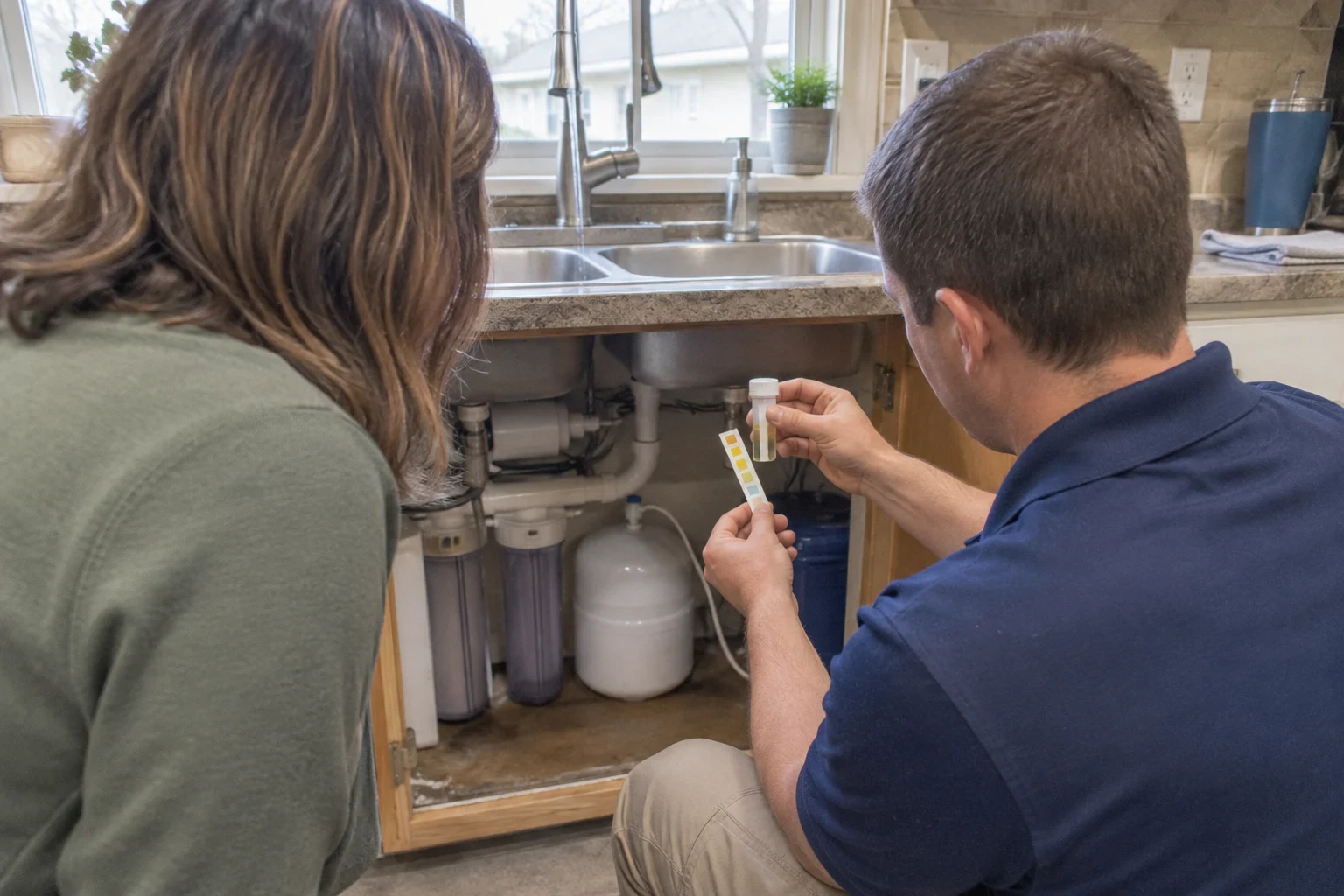
Softener pricing depends on your water and your basement more than anything else. We go over each part of the quote by phone or in person so nothing shows up later as a surprise.
- Unit size and valve type
- A larger household or harder water needs more resin capacity. Metered valves that regenerate only when needed cost more up front but use less salt and water.
- Plumbing at the install spot
- Older galvanized or mixed piping, a main line far from a drain, or a tight utility room adds parts and time.
- Removing old equipment
- Pulling out a previous softener or a failed filter housing is extra work we list separately.
- Added treatment
- If you also want better drinking water, pairing the softener with reverse osmosis at the kitchen sink changes the total.
Softener questions we hear often
Something not covered here? (414) 441-4034
Will softened water taste salty?
Most people notice no salty taste at all. The amount of sodium a softener adds depends on how hard your water was to start with. If you're keeping an eye on sodium, you can fill the brine tank with potassium pellets in place of regular softener salt. Another option is a reverse osmosis faucet at the kitchen sink for the water you drink and cook with.
How often do I add salt?
Most households top it off every month or two. Keep the salt above the water level in the brine tank, and if a hard crust forms on top, break it up. We point out what to watch for before we leave on install day.
Can I finance a new softener?
Yes. Financing is available through U.S. Bank Avvance, on approved credit. Give us a call and we will walk you through how it works.
Can I back out once I've signed?
Yes. You get three business days from the day you sign to cancel. Before that, your quote stays good for 30 days, so you can compare and decide without pressure.
Does a softener remove iron or well water problems?
It can manage light iron, but higher iron levels, a sulfur smell or sediment call for different equipment. Our Well Water Treatment page covers those systems.
Ready for softer water?
Tell us about your home and what you are seeing at the tap. We will explain financing and put together a written quote you can take your time with.