ServicesWell Water Treatment
Well Water Treatment in St. Francis
If your well water smells like sulfur, stains the tub orange or leaves crust on every faucet, we can help. We match the equipment to what your water is actually doing, explain each piece in a written quote and install it neatly in your home.
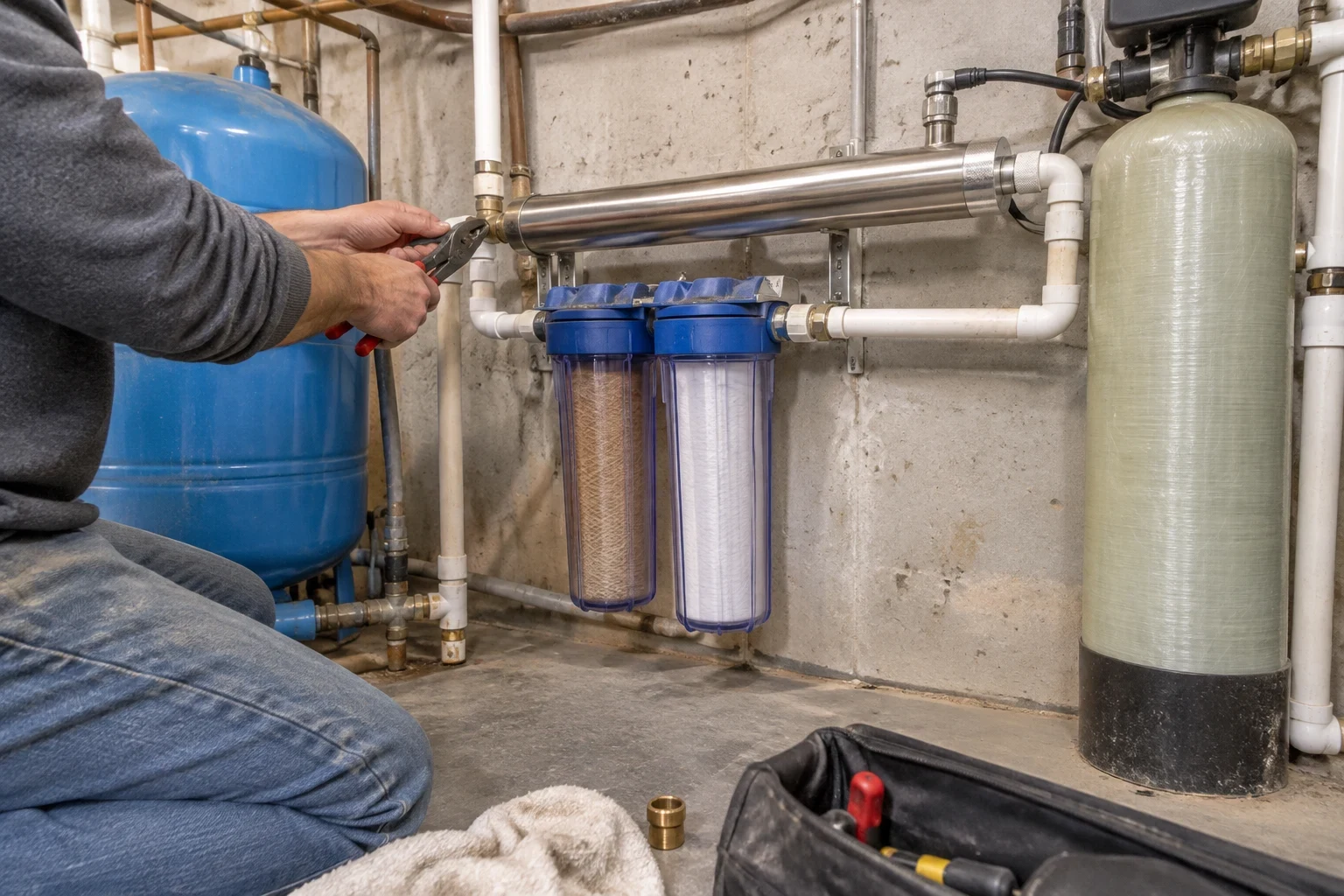
Treatment matched to your well
A private well is its own water supply, and no two behave quite the same. Groundwater in southeastern Wisconsin often runs hard and can carry iron, manganese or hydrogen sulfide. One house might need only a sediment filter. The next might need an iron filter followed by a softener. We start from your lab results and what you see at the tap, then recommend only the pieces that solve a problem you actually have.
Problem water also leaves marks around your home: orange rings in toilets, a water heater packed with scale, a faucet cartridge worn out years early. When we visit, we photograph what we find so you have a clear, dated record. If you are wondering whether something belongs in a homeowner's insurance claim, we will explain what we saw in plain terms. We are not the adjuster and we won't promise you what a policy will pay.
What a well treatment install includes
- A look at your water report
- We read through your most recent lab results with you and point out which numbers matter for treatment. Iron, manganese, hardness, pH and sulfur odor each call for different equipment.
- Iron and sulfur filtration
- For orange staining and rotten-egg smell, we install a filter that oxidizes iron and hydrogen sulfide so they can be trapped and backwashed away. It handles the problem before water reaches your fixtures.
- Softening for hard well water
- If your report shows high hardness, a softener goes after the iron filter to stop scale in pipes, the water heater and the dishwasher. Our Water Softeners page covers that equipment in more detail.
- Sediment and drinking water stages
- A sediment filter catches sand and grit that wear out valves. If you also want cleaner water for drinking and cooking, a Reverse Osmosis unit at the kitchen sink can finish the job.
- Clean install and bypass valves
- We plumb the system after your pressure tank with bypass valves, so you can isolate the equipment without shutting off the house. Floors get covered and the work area is left swept.
When your well water is telling you something
Rust-colored marks
Reddish rings in the toilet bowl, sink stains and dingy laundry usually mean dissolved iron is in the water. Bleach often locks those marks in instead of lifting them.
Sulfur odor at the tap
A smell like rotten eggs, strongest from the hot side, often traces back to hydrogen sulfide in the well or a reaction inside the water heater.
Crusty fixtures and worn-out appliances
White buildup on showerheads, a water heater that rumbles or glasses that come out of the dishwasher filmy all point toward hard water.
Sand in screens and aerators
Fine grit that keeps plugging faucet aerators and appliance inlet screens slowly chews up valves and seals.
A change in look or taste
Cloudy water, a metal taste or a shift after heavy rain is a good reason to get an updated lab report before picking any equipment.
How the work goes, from first call to running water
- 1
Talking it through by phone
You describe what is going on with your water and let us know if you have a recent lab report. If you want to hear about financing, this is a good time, so you know where you stand from the start.
- 2
Home visit and a line-item quote
We check your pressure tank, piping and the space you have, take photos and write up a quote with each part listed. The quoted price is honored for a full 30 days, so there is no rush to decide. Signing doesn't lock you in right away either: the agreement can be canceled within three business days.
- 3
Install day
The water is shut off for part of the day while we plumb in the equipment. We run the backwash drain line, set the controls and flush everything before you turn on a tap.
- 4
Walkthrough, then payment
We point out the bypass valves and show you how to check salt or media and what upkeep looks like. You pay in full only after the install is finished.
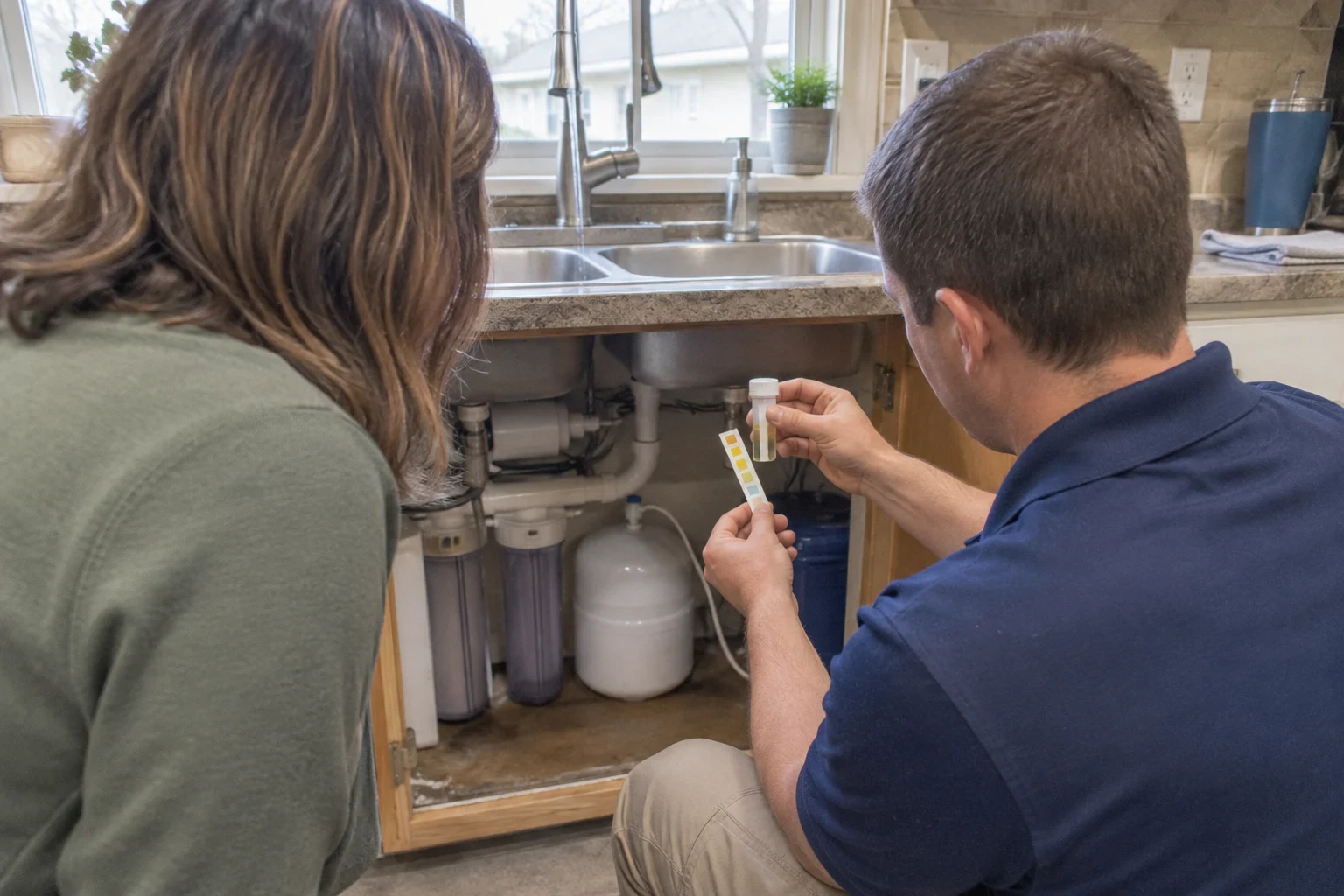
What moves the price of well treatment
Your price comes down to what is in your water and how much of it your household goes through in a day. A lone sediment filter is a small job, while an iron filter paired with a softener is a much bigger one. Every part and every hour of labor appears on your written quote, so there are no extras later. If spreading out the cost would help, ask us about U.S. Bank Avvance financing, offered on approved credit.
- The numbers on your water report
- Heavier iron, manganese or sulfur readings need more media or a more specialized filter. When several problems show up together, the setup usually grows to more than one stage.
- How much water you use at once
- The equipment needs to keep pace when a shower and the washing machine run together. More people or more bathrooms means larger tanks.
- Room and piping around the pressure tank
- A cramped basement, aging galvanized pipe or no drain close by for backwash can add parts and time.
- Drinking water extras
- A reverse osmosis unit or another point-of-use filter adds to the total. Plenty of homes do fine without one.
Well water treatment questions
Something not covered here? (414) 441-4034
Do I need a lab report before you can recommend anything?
It makes a big difference. Equipment works best when it is sized to real numbers, and guessing often means paying for parts you don't need. If your most recent report is several years old, getting a fresh one from a lab before you buy is a smart step.
Will my homeowner's insurance pay for well treatment equipment?
Treatment equipment is usually treated as a home improvement rather than something a policy pays for. Damage from a sudden event is a separate question, and only your insurer can answer it. We can give you photos and a written description of what we found to pass along to them.
Can one system handle both iron and hard water?
A softener can sometimes take care of a small amount of iron on its own. Higher iron or any sulfur smell usually calls for a dedicated iron filter ahead of the softener. We will tell you which one fits your water and why.
How much upkeep does a well system need?
Most systems backwash on their own schedule. You may need to add salt to a softener, change a sediment cartridge a few times a year and glance at the control settings now and then. We show you all of it before we leave.
Will I be without water during the install?
For part of the day, yes. We plan the shutoff around your schedule and turn the water back on as soon as the equipment is plumbed in and flushed.
Find out what your well water needs
Describe the smell, stains or grit you are dealing with and we will lay out the choices that fit your home. We can go over financing on the same call and set a time for your free quote.