ServicesReverse Osmosis
Reverse Osmosis in St. Francis
Our under-sink reverse osmosis setups put a separate tap at your kitchen sink just for the water you drink and cook with. Expect cleaner taste, fewer cases of bottled water to carry in, and a plain explanation of how the system works and what upkeep costs over time.
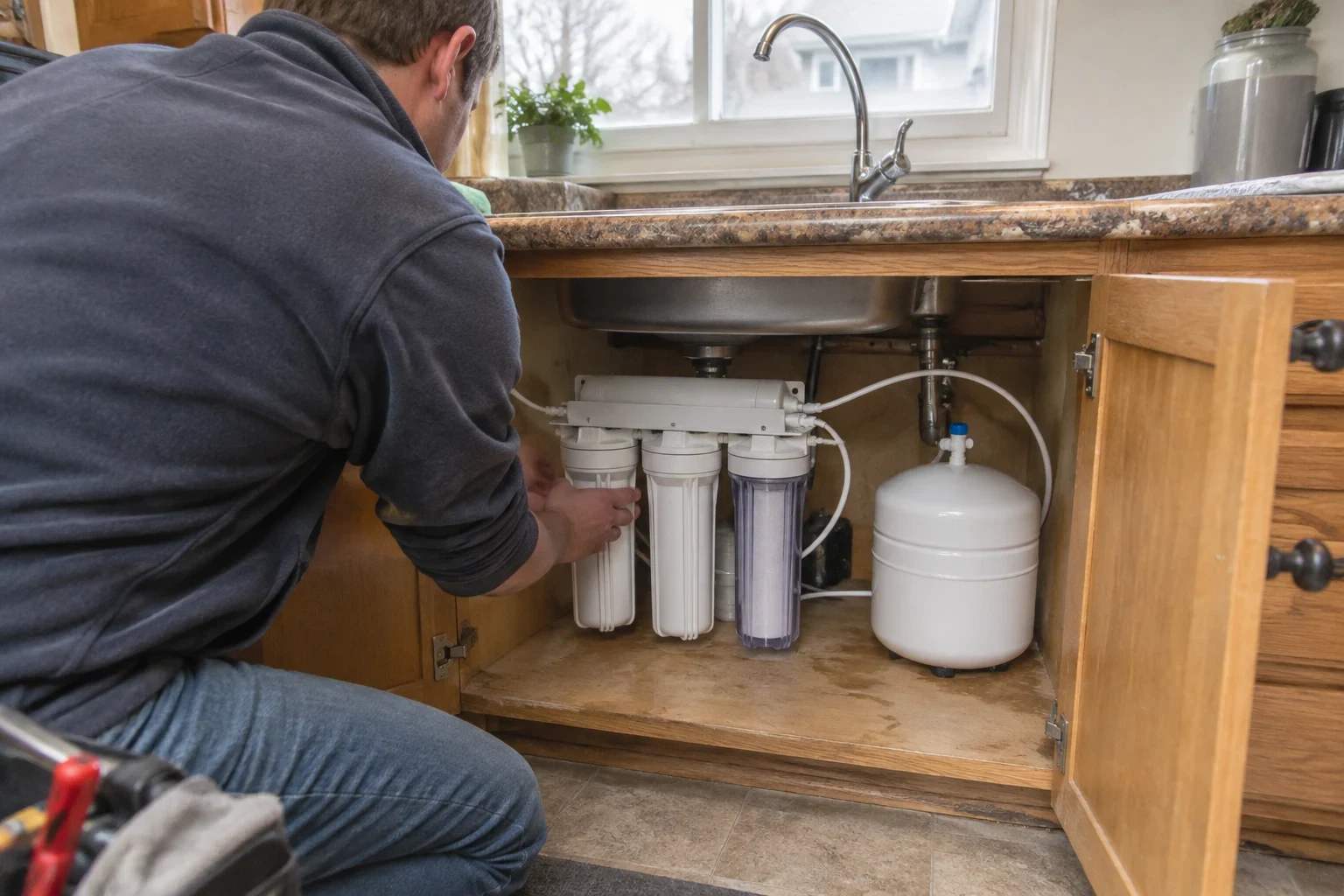
How Reverse Osmosis Works Under Your Sink
Reverse osmosis forces tap water through an extremely fine membrane that blocks most dissolved minerals and many trace contaminants. First, a sediment filter traps grit and a carbon filter takes out chlorine. After the membrane, one more carbon stage smooths out the taste. Treated water waits in a compact tank until you open the small faucet we add next to your regular one.
Choose it when your focus is the water your family drinks and cooks with. It suits homes with older plumbing, households that go through a lot of bottled water, and anyone bothered by a chlorine or flat taste. If what bugs you is scale on fixtures or chlorine smell in the shower, a water softener or whole-home filtration may be the smarter first step, and we will tell you that on the call.
Sometimes the cabinet holds a surprise. If we spot a slow leak or water damage from an old filter or supply line, we take photos and explain what homeowners are typically asked to show their insurer. We are not your adjuster, and we will not guess at what a claim will pay.
What Comes With Your Installation
- A multi-stage filter system
- Sediment and carbon prefilters, the RO membrane and a final carbon stage for taste. We walk you through what each part does, so the quote makes sense.
- A separate faucet for drinking water
- If your sink already has a spare opening from a sprayer or soap pump, we use it. Otherwise we cut a neat new hole in the sink deck or counter.
- Storage tank, feed and drain
- A pressurized tank goes in the cabinet or close by, holding enough for everyday cooking and drinking. We tie in the cold water supply and the drain connection so everything runs quietly on its own.
- Fridge or ice maker hookup if you want it
- We can extend a line to your refrigerator so the door dispenser pours filtered water as well. Many people find RO ice comes out clearer and better tasting.
- Flush, leak check and a quick lesson
- Before we leave, we run water through the fresh cartridges to clear them and look over each connection for any sign of seepage. Then we show you how to change filters yourself. You also keep a short note with the correct replacement parts and a rough timetable for swapping them.
When Reverse Osmosis Is Worth It
Bottled water is on every grocery list
If you keep hauling cases home, a system under the sink cuts down on carrying and on plastic to recycle.
You taste chlorine at the tap
Chlorine does an important job in public water, yet many people dislike how it tastes. The carbon stages in an RO unit take out most of it.
The plumbing in your home is older
Lead solder or worn fixtures in older homes can affect what comes out of the faucet. Reverse osmosis is one of the stronger options for lowering lead in your drinking water.
Coffee and ice taste a little off
Minerals and chlorine change the flavor of drinks and leave a film inside kettles. Morning coffee is often where people first notice the improvement.
Your current filter is past its prime
A cracked housing, damp cabinet floor or cartridge that has gone years without a change means it is time for a proper replacement. If we find damage, we photograph it so you have a record.
What Shapes the Price of Reverse Osmosis
Two things drive most of the cost: the unit you pick and how much work it takes to fit it into your kitchen. If you would rather spread out payments, we cover financing on the same call as your quote. It is available through U.S. Bank Avvance, on approved credit. We point out anything unusual under your sink before the install is booked, so the day itself holds no surprises.
Which unit you pick
More filter stages, a higher daily output, a remineralizing cartridge or a tankless model each change the price. We explain what each option does so you can decide what is worth it to you.
Your countertop material
Reusing a spare hole in the sink is quick. Cutting a new one through granite or quartz takes longer and calls for a special bit.
A line to the fridge
Feeding your refrigerator or ice maker means extra tubing, fittings and labor. The farther the fridge sits from the sink, the more that adds.
What we find in the cabinet
A corroded shutoff valve, a tricky drain layout or a cramped cabinet can mean added parts or time. You hear about these when we quote, not halfway through the job.
How Installation Day Goes
- 1
Talk it through on the phone
We ask about your sink, your cabinet space and whether you want a fridge line. You get a free quote and financing information on that call, and the quote holds for 30 days.
- 2
Protect and prepare the space
We clear and cover the cabinet floor, shut off the cold water supply and check that your shutoff valve closes fully. If an old valve is seized, we tell you before going further.
- 3
Mount the system and faucet
The unit hangs on the cabinet wall or sits on the floor, the faucet goes in, and the drain connection is made to your sink drain. Most installs take a few hours.
- 4
Flush, test and clean up
We run the system to flush the new filters, watch every fitting for leaks, and pour you the first glass. Then we clean up, show you the filter changes, and you pay in full once the install is complete.
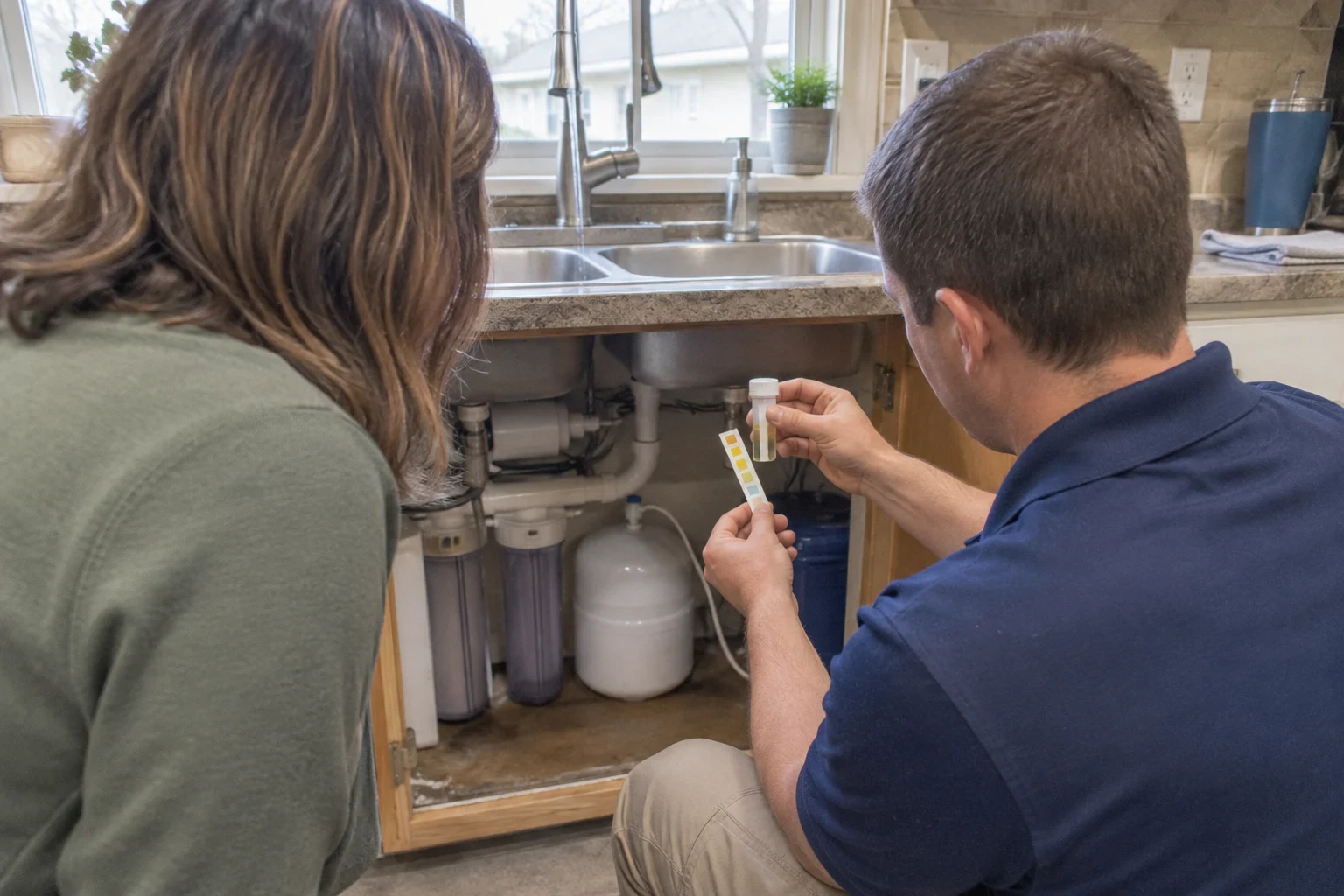
Common Questions About Reverse Osmosis
Does reverse osmosis waste a lot of water?
Every RO unit sends a share of water to the drain to keep the membrane clean. How much depends on the specific model and the pressure coming into your home. Current designs use far less than the systems of years ago, and since only your drinking and cooking water runs through it, most people barely see a change on their bill.
How often do the filters need changing?
Plan on swapping the prefilters and the final carbon filter about once or twice a year. The membrane itself usually lasts a few years with ordinary use. We show you how to make the change, which takes a few minutes, and leave you a list of the right replacement parts.
Will it reduce lead from my plumbing?
Reverse osmosis ranks among the better home options for cutting lead in the water from the tap it feeds. It does nothing to the pipes, so only the water from the RO faucet is treated. To see what is in your water before it enters your home, your utility's yearly water quality report is a good starting point.
Can I connect it to my refrigerator?
In most kitchens, yes. We run tubing from the unit to the water inlet on your fridge, so the dispenser and ice maker both draw filtered water. Bring it up when we talk so it is part of your quote.
How does paying for it work?
Nothing is due up front, and the full amount is paid once the install is complete. If monthly payments suit you better, ask about financing through U.S. Bank Avvance, on approved credit. Should you change your mind after signing, the agreement gives you three business days to cancel.
Is RO the right choice if my whole house has a water problem?
On its own, usually not. An RO unit serves a single faucet, so hardness or a chlorine smell in every shower is better handled with a water softener or whole-home filtration. We will give you a straight answer about which one fits.
Better Drinking Water, Explained Plainly
Tell us about your kitchen and what bothers you about your water. We will walk you through the system that fits, the cost and your payment options, with no pressure.